
The first sign is usually subtle. Your plant looks tired. The leaves have a dusty, stippled appearance, like someone gently sandblasted them. You lean in closer, and there it is: fine webbing tucked into a leaf joint.
Spider mites.
They're not dramatic like mealybugs with their cottony white clumps. They're not annoying like fungus gnats buzzing in your face. Spider mites are quiet. Methodical. They set up shop on the undersides of your leaves and slowly drain the life out of your plant while you wonder why it looks increasingly sad.
Finding spider mites doesn't mean you failed. It means you have plants, and you probably have dry indoor air. These pests thrive in exactly the conditions most of us create during heating season: warm and dry.
The question isn't why you have them. It's how to get rid of them before they spread to every plant in your collection.
Understanding the Enemy
Spider mites are tiny arachnids (not insects) that are barely visible to the naked eye. They look like moving dust specks, usually red, brown, or pale colored. The webbing you see isn't decoration. It's infrastructure. They use it to protect their colonies and travel between leaves.
The webbing is actually a late-stage sign. By the time you see it, the infestation is well established. Earlier signs include:
- Stippled, dusty-looking leaves (tiny yellow or white dots)
- Leaves that look faded or bronzed
- Fine webbing in leaf axils and between stems
- Tiny moving dots on leaf undersides (use your phone camera to zoom in)
Where They Hide
Spider mites prefer leaf undersides where they're protected from light and predators:
- Undersides of leaves (primary location)
- Leaf axils and stem joints
- New, tender growth
- Along leaf veins
- Any sheltered crevice
They spread fast. If you see them on one plant, check every plant within a few feet. They travel on air currents, clothing, and your hands.
Average Life Cycle (Indoor Conditions)
- Eggs to adult: ~7-8 days in warm, dry conditions
- Cooler/humid conditions: up to ~28 days
- Females lay: hundreds of eggs over their lifetime
- Adults live: 2-4 weeks, reproducing continuously
Total cycle in typical indoor conditions: 1-2 weeks
This matters because spider mites reproduce fast. A small problem becomes a big problem in days, not weeks. But this speed is also their vulnerability. Their short lifecycle means consistent treatment actually eliminates them, because you're killing multiple generations before they can reproduce.
Minimum treatment time: 3-4 weeks of consistent treatment to span multiple generations. Then shift to preventive cadence.
The Protocol: How to Actually Get Rid of Them
Step 1: Thorough Foliar Spray + Wipe (Every 5-7 Days)
Spider mites live on leaf undersides. A quick spray of the tops won't reach them. You need to be thorough.
- Shake the bottle well before and during use. The natural oils need to stay mixed.
- Spray all leaf surfaces to light runoff. Coat the tops AND undersides of leaves. Spray stems and leaf axils. If you're not sure whether you got it, spray it again. The undersides are non-negotiable.
- Wait up to 10 minutes. This gives the oils time to coat and smother the mites and their eggs.
- Wipe everything. Use a dry paper towel to physically remove mites, eggs, webbing, and spray residue. This step is critical. The spray suffocates them; wiping removes them and their eggs.
- Rinse difficult-to-reach areas. For dense foliage or tight crevices, rinse with water to flush out any remaining mites. Plants with heavy foliage can be rinsed thoroughly in lieu of wiping.
- Check the undersides again. Use a magnifying glass or phone camera. Spider mites are tiny, and you need to confirm you're reaching them.
Repeat this entire process every 5-7 days until you see zero stippling, zero webbing, and zero mites for 3 consecutive checks. Then shift to preventive spraying every 2-3 weeks.
Step 2: Boost Humidity
Spider mites thrive in warm, dry air. Your heating system is their paradise.
During active treatment:
- Group plants together (creates a microclimate of higher humidity)
- Use a humidifier nearby if possible
- Mist plants between treatments (water only, not spray)
- Keep plants away from heating vents
This doesn't replace treatment, but it makes the environment less hospitable and slows reproduction.
Step 3: Isolate Infested Plants
Spider mites spread. They travel on air currents, on your clothes, on your hands after touching an infested plant.
During treatment:
- Move infested plants away from healthy ones
- Wash your hands after handling infested plants
- Don't brush against infested plants and then touch others
- Check nearby plants weekly for early signs
The isolation continues until you've had 3 consecutive clear checks.
Step 4: Don't Stop Early
Here's where most people fail.
You treated twice, the webbing is gone, the leaves look better. Great! Except spider mite eggs are still on those leaves, and they'll hatch in 3-7 days. Stop treatment now, and you'll be back at square one in a week.
Continue treatment for the full 3-4 weeks minimum. Continue until you have 3 consecutive checks (5-7 days apart) with zero signs of mites. Then shift to preventive spraying every 2-3 weeks.
The lifecycle is fast. Your consistency needs to be faster.
Why Spider Mites Sometimes Get Worse Before They Get Better
You're not imagining it.
Eggs hatch continuously over 3-7 days. You killed the adults and nymphs, but the next generation was already developing on the leaf undersides.
This is normal. Stay consistent with every-5-7-day treatments, keep checking those undersides, and you'll break the cycle within 3-4 weeks.
The rapid lifecycle is frustrating, but it's also why spider mites are actually easier to eliminate than slow-reproducing pests like mealybugs. You just have to match their speed with consistency.
The Complete Weekly Schedule
| Day | Action |
|---|---|
| Day 1 | Thorough spray (all surfaces, especially undersides) + wipe + rinse |
| Days 2-6 | Monitor, mist with water to boost humidity |
| Day 7 | Check + respray if any mites/stippling remain |
| Ongoing | Continue every 5-7 days for 3-4 weeks minimum |
| After 3 clear checks | Shift to preventive spray every 2-3 weeks |
Timeline: 3-4 weeks of consistent treatment, then preventive cadence. Extend if any webbing or stippling reappears.
Common Mistakes That Keep Spider Mites Coming Back
Only spraying leaf tops. Spider mites live on the undersides. If you're not coating the undersides, you're missing the entire infestation.
Not wiping after spraying. The spray suffocates mites and loosens eggs, but physical removal is what actually clears them. Spraying without wiping leaves eggs behind.
Stopping too early. Two treatments isn't enough. Those eggs hatch in 3-7 days. Give it 3-4 weeks minimum and wait for 3 consecutive clear checks.
Ignoring humidity. Dry air is spider mite paradise. Boosting humidity during treatment slows their reproduction and makes your job easier.
Not isolating infested plants. Spider mites spread on air currents and contact. One infested plant can become ten in a week.
Mixing products. Don't combine this spray with neem, alcohol, or systemic treatments. This damages plants and reduces effectiveness. Pick one approach. Wait at least 7 days before switching.
Spraying in direct light. Oil-based sprays can cause leaf burn if applied under grow lights or in afternoon sun. Spray in early morning. Keep treated plants out of direct light for 6-12 hours until completely dry.
CAM Plant Precautions (Succulents, Orchids, Cacti)
Plants with Crassulacean Acid Metabolism (CAM), including snake plants, jade, aloe, orchids, and most succulents, are more sensitive to oil-based sprays. Their leaf tissues can be prone to damage with frequent oil exposure.
Spider mites love succulents. The fleshy leaves are easy targets. If you're treating spider mites on CAM plants:
- Spray in early morning only. Never treat in the evening.
- Let the spray sit for up to 10 minutes, then rinse thoroughly with water.
- Provide good airflow and keep out of direct light until completely dry.
- Don't treat more than once every 10-14 days. This means elimination will take longer on these plants; plan for 6-8 weeks instead of 3-4.
- Boost humidity aggressively to compensate for less frequent spraying.
The extended treatment timeline is frustrating, but it's better than burning your echeveria while trying to save it. Patience and gentle consistency win here.
From One Plant Parent to Another
Spider mites are demoralizing in a specific way. They're so small you almost can't see them, which makes you feel like you're fighting something invisible. And by the time you notice the damage, they've been feasting for a while.
But here's what we've learned from thousands of customers who've been exactly where you are:
Spider mites are actually one of the easier pests to beat. Their fast lifecycle means consistent treatment works quickly. Unlike mealybugs with their 6-8 week cycles, spider mites can be eliminated in 3-4 weeks of steady effort.
Spray the undersides. Wait. Wipe. Boost humidity. Check again in 5-7 days. That's it.
You're not a bad plant parent. You just have dry indoor air and plants. And plants in dry air get spider mites sometimes.
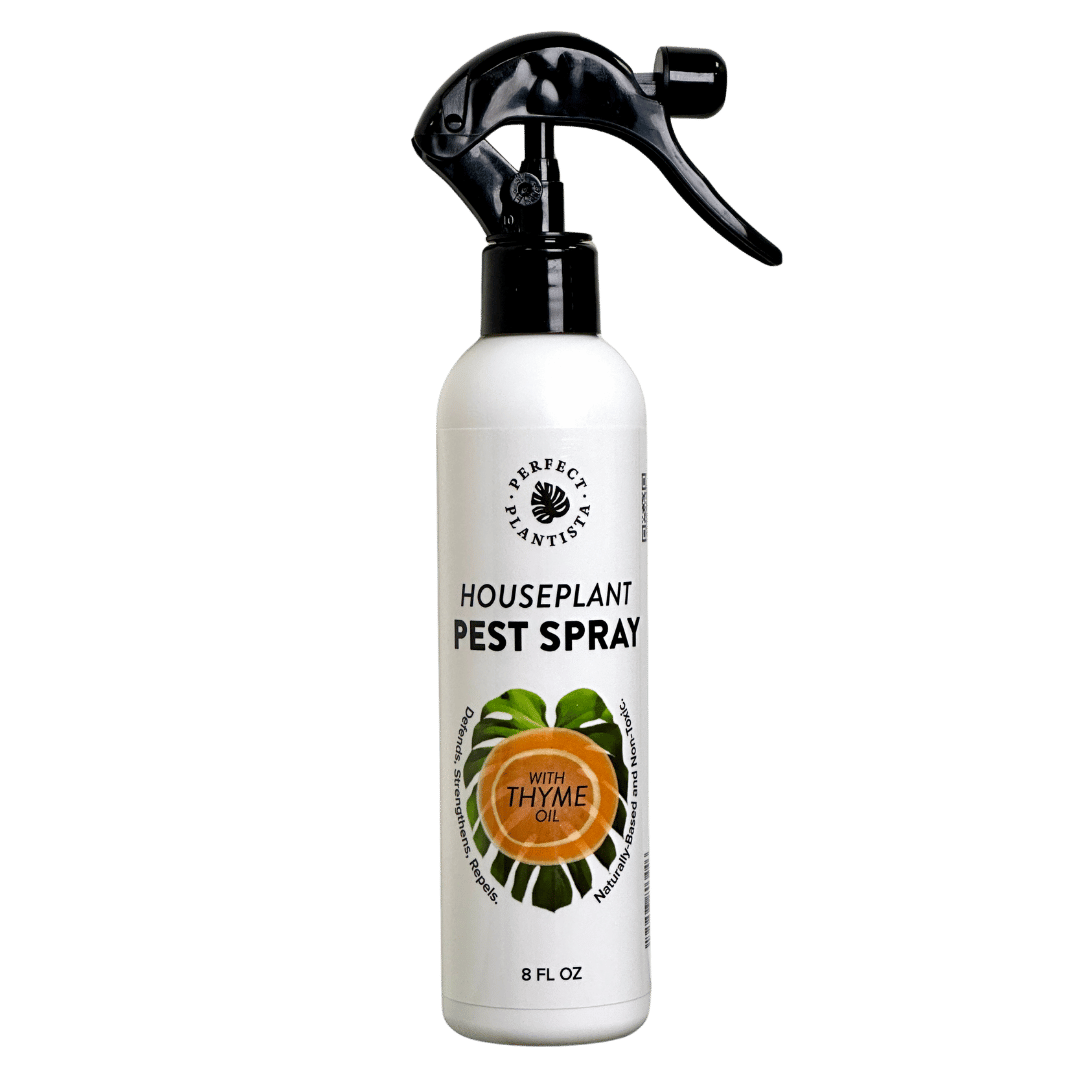
Our Houseplant Pest Spray combines thyme oil, cinnamon bark oil, and peppermint oil in a water-based formula that coats and smothers mites without leaving greasy residue. It's safe for pets once dry, and it smells like Christmas morning crossed with a candy cane. Which is significantly better than the garlic-adjacent nightmare of neem oil.
Quick Reference: Spider Mite Protocol
| Primary Method | Thorough foliar spray (especially undersides) + wipe |
| Focus Areas | Leaf undersides, axils, stems, new growth |
| Wait Time | Up to 10 minutes before wiping |
| Wipe | Dry paper towel to remove mites, eggs, webbing, and residue |
| Rinse | Flush dense foliage with water to clear hidden mites |
| Frequency | Every 5-7 days during active treatment |
| Duration | 3-4 weeks minimum; continue until 3 consecutive clear checks |
| Prevention | Every 2-3 weeks after elimination |
| CAM Plants | Treat only every 10-14 days, rinse thoroughly, morning applications only |
| Environment | Boost humidity, isolate infested plants |
Why this works: The triple-oil formula coats and smothers mites on contact. Wiping removes eggs hiding on leaf undersides. The fast ~1-week lifecycle means consistent treatment eliminates multiple generations within 3-4 weeks.
Why Spider Mites Require Thorough Coverage (And How to Save)
Spider mites spread fast and hide well. Proper treatment means coating every leaf, top and bottom, every 5-7 days for 3-4 weeks. If you have multiple plants (or learned the hard way that spider mites travel), that adds up.
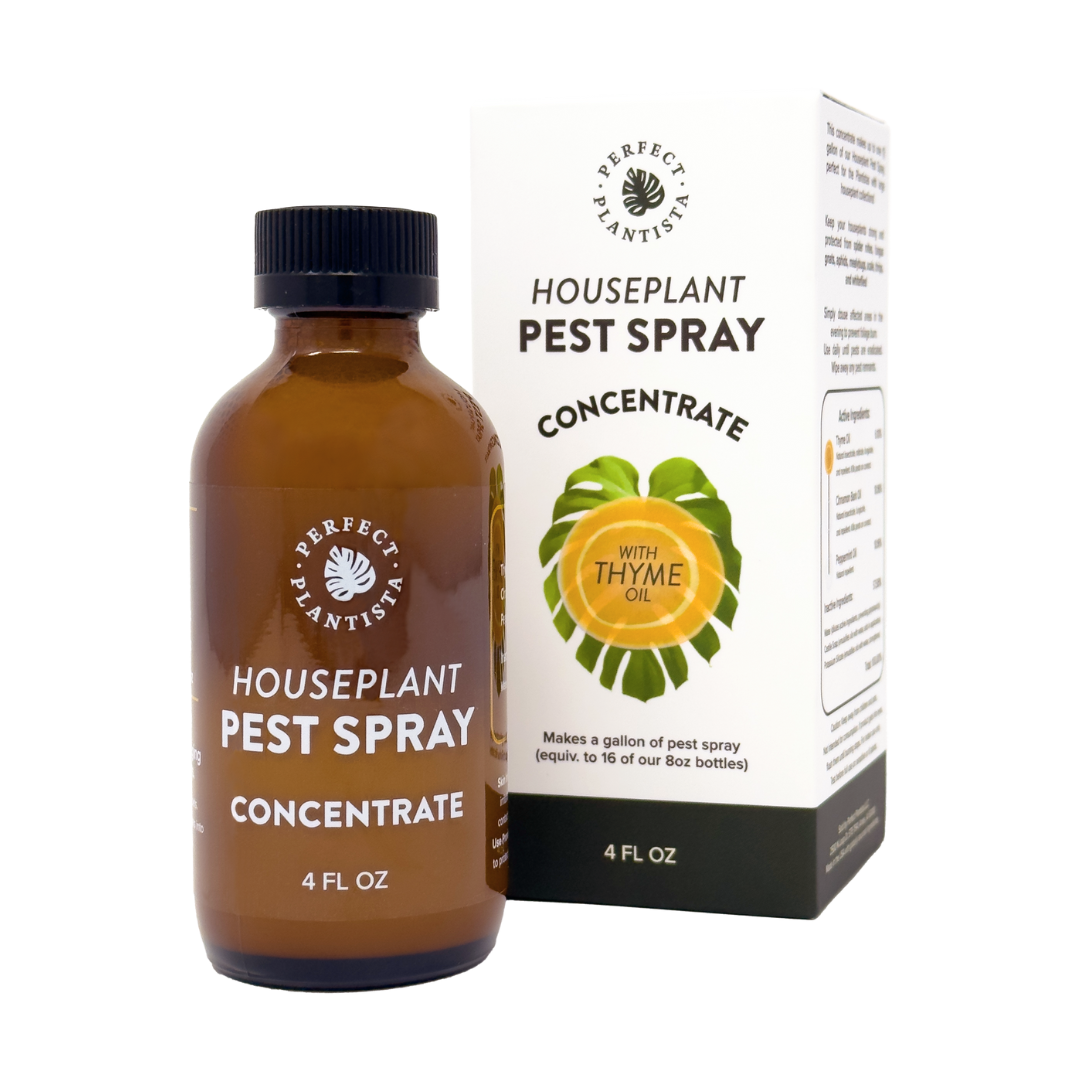
If you're treating more than a few plants, our Concentrate Starter Kit makes the math work in your favor.
One 4oz bottle of concentrate makes:
- Up to 16 bottles of 8oz ready-to-use spray, or
- Up to 8 bottles of 16oz ready-to-use spray
That's enough to treat your entire collection through the full spider mite protocol, with plenty left over for prevention. The Starter Kit includes the concentrate plus mixing bottles, so you're ready to go immediately.
For plant parents dealing with spider mites across multiple pots, the concentrate typically saves 40-50% compared to buying ready-to-use bottles individually. And since spider mites require thorough coverage on a regular schedule, that savings adds up.
[Shop the Concentrate] | [Shop Ready-to-Use Spray]
Safe, Effective Spider Mite Treatment for Indoor Plants
Perfect Plantista Houseplant Pest Spray combines thyme oil (0.23%), cinnamon bark oil (0.56%), and peppermint oil (0.56%) in a water-based carrier that won't leave greasy residue or overwhelm your apartment with chemical odors. It's a pet-friendly pest spray for plants that's safe for cats and dogs once dry, and it smells like cinnamon and peppermint rather than the garlic-adjacent nightmare of neem oil.
Whether you choose the ready-to-use indoor plant bug spray or mix your own from concentrate, the formula is the same: natural, effective, and designed specifically for the reality of houseplant pest control.
Your plants didn't ask for spider mites. Neither did you. But with consistent treatment and a product that actually works, you'll break the cycle and get back to enjoying your collection instead of inspecting every leaf underside with growing paranoia.