
If you've ever spotted a white cottony clump tucked into a stem joint and felt your stomach drop, you already know. Mealybugs.
They're not fast. They're not dramatic. They just sit there, looking like lint that somehow grew legs, slowly draining your plant while you wonder if you imagined them.
You didn't imagine them. And finding mealybugs doesn't mean you're a bad plant parent. It means you have plants. These pests hitchhike on new purchases, hide in nursery soil, and appear in even the most carefully tended collections.
The question isn't why you have them. It's how to get rid of them without losing your mind, or your plants, in the process.
This guide covers exactly how to use Perfect Plantista Houseplant Pest Spray to get rid of mealybugs for good, including the saturation and wiping protocol that actually dissolves their waxy armor, the timeline you need to outlast their lifecycle, and the crevice-checking routine that catches the ones hiding where you can't see them.
Understanding the Enemy
Mealybugs are soft-bodied insects covered in a white, waxy coating that makes them look like tiny cotton balls with legs. That coating isn't just aesthetic. It's armor.
The wax protects them from predators, dehydration, and (frustratingly) most contact sprays. It's why you can spray them directly and watch them keep crawling. Their protection is also their weakness, but only if you know how to dissolve it.
Where They Hide
Mealybugs aren't subtle, but they are strategic:
- Leaf axils (where the leaf meets the stem)
- Stem joints and nodes
- Undersides of leaves
- Crown areas and soil edges
- Inside tightly packed new growth
They cluster. If you see one, assume there are more. Check every crevice.
Average Life Cycle (Indoor Conditions)
- Eggs: 10-20 days (females lay 100-200+ under cottony sacs)
- Crawlers: Days 1-3 after hatch (mobile, spreading to new areas)
- Nymphs: 6-8+ weeks total development
- Adults: Ongoing reproduction
Total cycle: 6-8+ weeks depending on species and temperature
This matters because a single treatment won't work. Those eggs are protected under waxy sacs, waiting to hatch. You need to outlast the entire lifecycle, plus a buffer.
Minimum treatment time: 4-6 weeks of consistent treatment. Extend if any white cottony residue reappears.
The Protocol: How to Actually Get Rid of Them
Step 1: Heavy Saturation + Wipe (Twice Per Week)
Mealybugs hide in crevices, and their waxy coating needs direct contact to dissolve. This isn't a light misting situation.
- Shake the bottle well before and during use. The natural oils need to stay mixed.
- Spray all affected areas to light runoff. Saturate stems, leaf joints, undersides of leaves, and any visible cottony clusters. Get into the crevices. If you're not sure whether you got it, spray it again.
- Wait up to 10 minutes. This gives the oils time to dissolve the waxy protection and smother the insects beneath.
- Wipe everything. This step is non-negotiable. Use a dry paper towel to physically remove cottony masses, dead bugs, and spray residue. The spray loosens them; wiping removes them.
- Rinse difficult-to-reach areas. For leaf axils, crowns, and dense foliage where your paper towel can't reach, rinse well with water to flush out any remaining mealybugs and residue. Plants with heavy foliage can be rinsed thoroughly in lieu of wiping. Try an adjustable spray bottle or rinse in the sink/shower.
- Check the crevices again. Use a cotton swab for tight spots. Mealybugs love to tuck themselves into places you can't easily reach.
Repeat this entire process twice per week for 4-6 weeks minimum.
Step 2: Soil Surface Protocol
Mealybug crawlers migrate. They'll travel down stems into soil and back up again. If you're only treating foliage, you're playing whack-a-mole.
For the first 5 days: Lightly mist the top ½ inch of soil daily to intercept crawlers moving to and from the root zone.
After the first week: Reduce to every other day, or resume if you see crawlers reappear at the crown.
Step 3: Don't Stop Early
Here's where most people fail.
You stopped seeing mealybugs after week 2. Great! Except those eggs under the waxy sacs are still developing. Stop treatment now, and you'll be back at square one in 10 days.
Continue treatment for 2 full weeks after you see zero mealybugs. If any white cottony residue reappears, extend treatment another 2-4 weeks.
The lifecycle is long. Your patience needs to be longer.
Why Mealybugs Sometimes Get Worse Before They Get Better
You're not imagining it.
Eggs hatch in waves over 10-20 days. You killed the adults, but the next generation was already waiting under those cottony sacs like a very small, very annoying army.
This is normal. Stay consistent with twice-weekly treatments, keep checking those crevices, and you'll break the cycle within 4-6 weeks.
The Complete Weekly Schedule
| Day | Action |
|---|---|
| Day 1 | Heavy spray + wipe + rinse (all surfaces, stems, crevices) |
| Days 1-5 | Light soil surface mist daily |
| Day 4 | Heavy spray + wipe + rinse again |
| After Day 5 | Reduce soil misting to every other day |
| Ongoing | Continue 2x/week treatment for 4-6 weeks |
Timeline: Minimum 4-6 weeks of consistent treatment. Extend if any cottony residue reappears.
Common Mistakes That Keep Mealybugs Coming Back
Not wiping after spraying. The spray dissolves their waxy protection, but those cottony egg sacs need physical removal. Spraying without wiping is like loosening a stain and walking away.
Skipping the rinse. Dense foliage and tight crevices hide mealybugs that wiping can't reach. Rinsing flushes them out.
Stopping too early. Two weeks of clear plants isn't enough. Those eggs take 10-20 days to hatch. Give it 4-6 weeks minimum.
Missing the soil. Crawlers migrate through the root zone. If you're only treating foliage, you're missing half the population.
Mixing products. Don't throw neem, alcohol, and systemic granules at the problem simultaneously. This damages plants and reduces effectiveness. Pick one approach. Wait at least 7 days before switching.
Spraying in direct light. Oil-based sprays can cause leaf burn if applied under grow lights or in afternoon sun. Spray in early morning. Keep treated plants out of direct light for 6-12 hours until completely dry.
CAM Plant Precautions (Succulents, Orchids, Cacti)
Plants with Crassulacean Acid Metabolism (CAM), including snake plants, jade, aloe, orchids, and most succulents, are more sensitive to oil-based sprays. Their leaf tissues can be prone to damage with frequent oil exposure.
If you're treating mealybugs on CAM plants:
- Spray in early morning only. Never treat in the evening.
- Let the spray sit for up to 10 minutes, then rinse thoroughly with water.
- Provide good airflow and keep out of direct light until completely dry.
- Don't treat more than once every 14 days. This means mealybug elimination will take longer on these plants; plan for 8-12 weeks instead of 4-6.
- Avoid soil drenching unless absolutely necessary, and only at half-strength dilution.
The extended treatment timeline is frustrating, but it's better than burning your echeveria while trying to save it. Patience and gentle consistency win here.
From One Plant Parent to Another
Mealybugs are demoralizing. You find one cottony clump, and suddenly you're inspecting every plant in your collection with a flashlight at 11pm.
But here's what we've learned from thousands of customers who've been exactly where you are:
It's not about finding a magic spray. It's about consistency.
Saturate. Wait. Wipe. Rinse. Check the crevices. Repeat twice a week for 4-6 weeks. That's it.
The waxy coating that makes mealybugs frustrating is also their weakness. It takes time to dissolve, but once you do, they can't rebuild it fast enough to survive consistent treatment.
You're not a bad plant parent. You just have plants. And plants come with bugs sometimes.
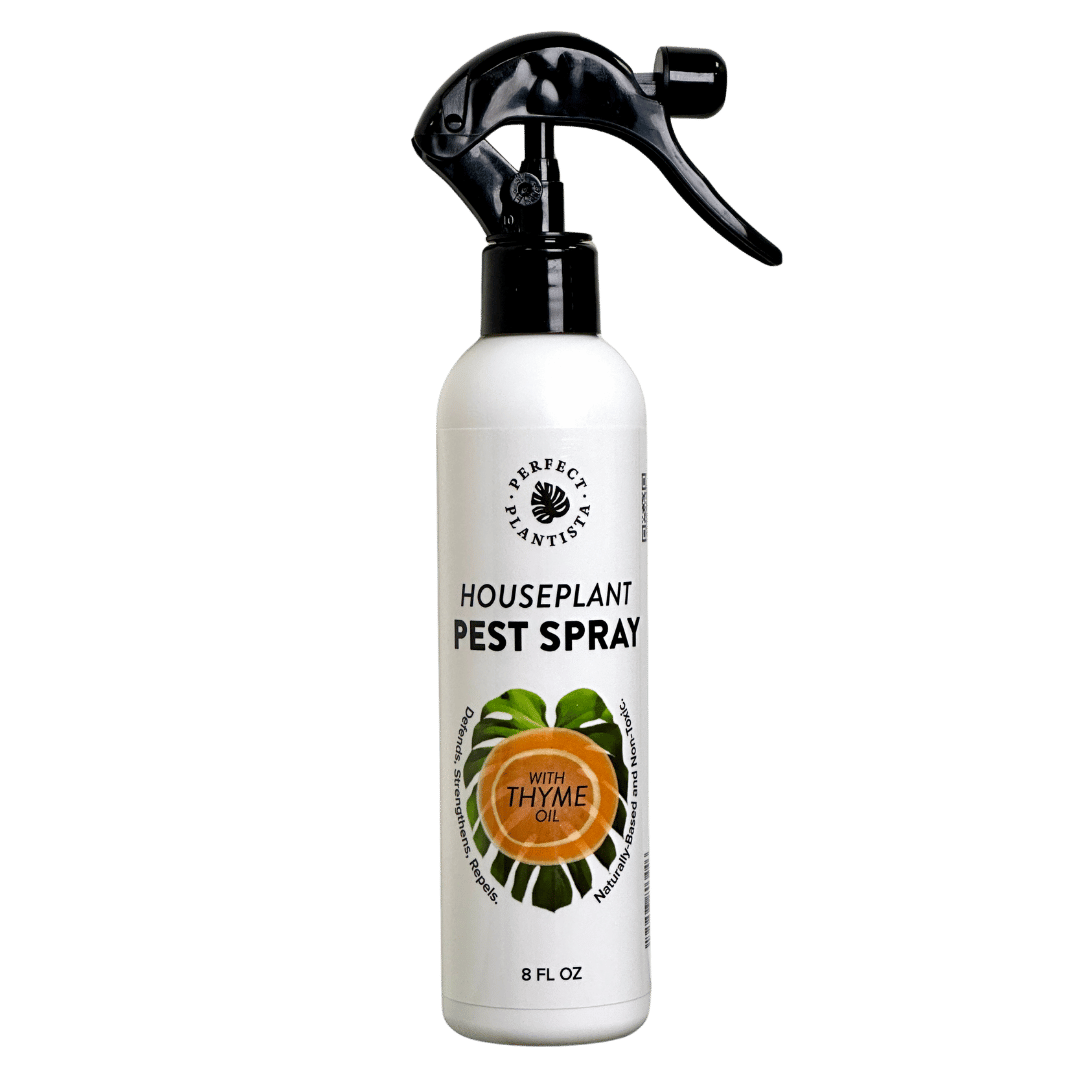
Our Houseplant Pest Spray combines thyme oil, cinnamon bark oil, and peppermint oil in a water-based formula that won't leave greasy residue or make your apartment smell like a garlic factory. It's safe for pets once dry, and it smells like Christmas morning crossed with a candy cane. Which is significantly better than neem.
Quick Reference: Mealybug Protocol
Primary Method: Heavy saturation + wipe + rinse, twice per week
Focus Areas: Stems, leaf joints, leaf undersides, crown, crevices
Wait Time: Up to 10 minutes before wiping
Wipe: Dry paper towel to remove cottony masses and residue
Rinse: Flush axils, crowns, and dense foliage with water to clear hidden mealybugs
Soil Protocol: Mist top ½ inch daily for 5 days if crawlers present at crown
Duration: 4-6 weeks minimum; extend if cottony residue reappears
CAM Plants: Treat only every 14 days, rinse thoroughly, morning applications only
Why this works: The triple-oil formula dissolves waxy coatings on contact. Wiping and rinsing remove protected egg sacs. Consistent treatment outlasts the 6-8 week lifecycle.
Why Mealybugs Require More Product (And How to Save)
Here's the reality: mealybugs are the marathon of houseplant pests.
Spider mites? A few weeks of consistent treatment. Aphids? Often resolved in 2-3 applications. But mealybugs require twice-weekly saturation plus wiping for 4-6 weeks minimum. If you have multiple infested plants, that adds up fast.
If you're treating more than a couple plants (or have learned the hard way that mealybugs spread), our Concentrate Starter Kit makes the math work in your favor.
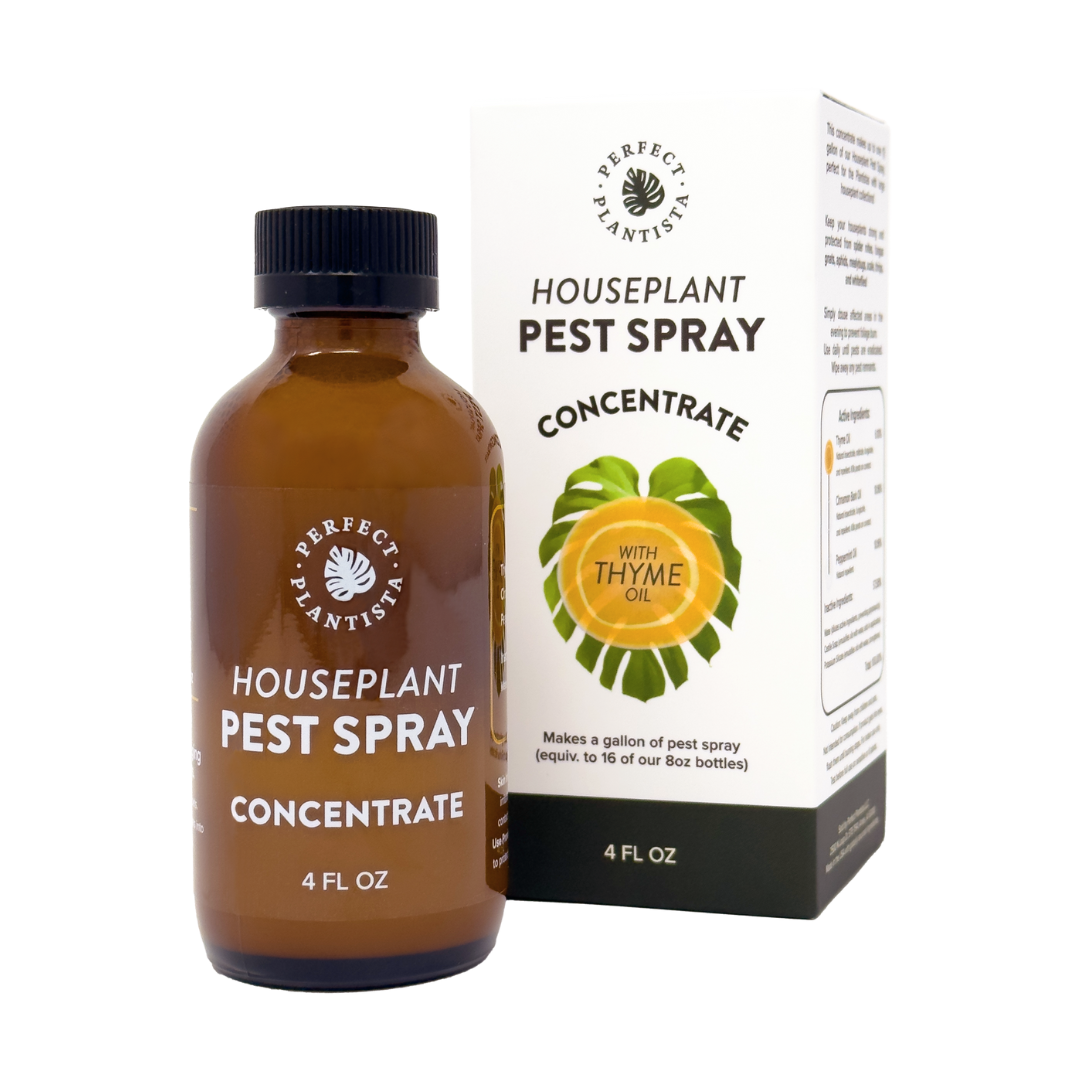
One 4oz bottle of concentrate makes:
- Up to 16 bottles of 8oz ready-to-use spray, or
- Up to 8 bottles of 16oz ready-to-use spray
That's enough natural houseplant pest spray to treat your entire collection through the full mealybug lifecycle, with plenty left over for prevention and future infestations. The Starter Kit includes the concentrate plus mixing bottles, so you're ready to go immediately.
For plant parents dealing with mealybugs across multiple pots, the concentrate typically saves 40-50% compared to buying ready-to-use bottles individually. And since mealybug treatment isn't a one-and-done situation, that savings adds up.
[Shop the Concentrate] | [Shop Ready-to-Use Spray]
Safe, Effective Mealybug Treatment for Indoor Plants
Perfect Plantista Houseplant Pest Spray combines thyme oil (0.23%), cinnamon bark oil (0.56%), and peppermint oil (0.56%) in a water-based carrier that won't leave greasy residue or overwhelm your apartment with chemical odors. It's a pet-friendly pest spray for plants that's safe for cats and dogs once dry, and it smells like cinnamon and peppermint rather than the garlic-adjacent nightmare of neem oil.
Whether you choose the ready-to-use indoor plant bug spray or mix your own from concentrate, the formula is the same: natural, effective, and designed specifically for the reality of houseplant pest control.
Your plants didn't ask for mealybugs. Neither did you. But with consistent treatment and a product that actually works, you'll break the cycle and get back to enjoying your collection instead of inspecting every leaf joint with growing paranoia.