
Why Botanical Pest Sprays Outperform DIY Alternatives (and How to Use Them Safely Around Pets)
If you've ever spotted webbing on your fiddle leaf fig or tiny flies hovering above your pothos, you know the feeling. That mix of dread and determination. The immediate urge to Google something at 2 AM.
Here's what experienced plant parents have learned the hard way: not all treatments are created equal. Some DIY remedies can do more harm than good. And that bottle of neem oil collecting dust in your cabinet? There's a reason it's still full.
This guide examines the science behind common pest control options and explains why a thoughtfully formulated houseplant pest spray using botanical essential oils offers a superior approach for most indoor plant keepers. We'll also address one of the most common concerns: keeping your cats and other pets safe when treating your plants.
Why Rubbing Alcohol Falls Short
Rubbing alcohol (isopropyl alcohol) is probably the most commonly recommended DIY treatment for houseplant pests, particularly mealybugs. The logic seems sound: alcohol dissolves the waxy protective coating on soft-bodied insects, causing rapid dehydration. UC IPM recommends diluted alcohol solutions (10-25%) for spray application, or 70% applied via cotton swab for spot treatment.
However, the limitations are significant:
No residual protection. Once alcohol evaporates (within seconds), it provides zero ongoing pest deterrence. Eggs and hidden insects survive untouched.
Phytotoxicity risk. Ferns, orchids, succulents, and plants with fuzzy or delicate leaves can suffer burns or discoloration. Application in direct sunlight or at high temperatures compounds the problem.
Limited efficacy data. A Rutgers University study on bed bugs (not plant pests, used for illustrative purposes) found rubbing alcohol killed a maximum of 50% of specimens even with direct contact.
Contact-only action. You must physically reach every pest. Insects hiding in leaf axils, root crowns, or soil remain unaffected.
For isolated mealybugs on hardy plants, alcohol dabbed with a cotton swab can work as a quick fix. But for comprehensive pest management, especially infestations involving spider mites, thrips, or fungus gnats, it's simply not enough.
Neem Oil: Powerful but Problematic
Neem oil, derived from the seeds of the neem tree (Azadirachta indica), contains azadirachtin, a compound that disrupts insect hormone systems. It prevents molting, feeding, and reproduction. Research published in the Journal of Pest Science confirms that neem oil can achieve 78-90% nymphal mortality against whiteflies when applied as a soil drench.
So why isn't neem the universal solution? Several practical issues limit its usefulness:
Slow action. Azadirachtin is an insect growth regulator, not a contact killer. UC IPM explicitly notes its efficacy is "slower than conventional miticides." You won't see dead pests immediately. Results take days to weeks.
Poor spider mite control. Multiple sources rate neem at less than 80% efficacy against spider mites, making it a poor first choice for these common pests. Togni et al. (2019) in Crop Protection found that product efficiency was "below 80%" when testing commercial neem products against Tetranychus urticae.
Phytotoxicity on sensitive plants. Ferns, orchids, African violets, and succulents show documented sensitivity to neem damage, particularly when applied above 85°F or in direct sunlight.
Unpleasant odor. Neem's sulfurous, garlic-like smell lingers for days. Not ideal for indoor spaces. Or anywhere, really.
Residue concerns. The oil can clog leaf pores (stomata) if not properly rinsed, interfering with gas exchange.
Neem remains an excellent choice for systemic whitefly control and as part of an integrated approach. But for general-purpose indoor plant pest spray needs with faster results and better user experience, botanical essential oil sprays offer meaningful advantages.
BTI for Fungus Gnats: Effective but Specialized
Bacillus thuringiensis israelensis (BTI) deserves special mention for fungus gnat treatment. This naturally occurring soil bacterium produces proteins that specifically target Diptera larvae, the soil-dwelling stage of fungus gnats. Research shows BTI can achieve 88-92% mortality against first instar larvae.
However, BTI has critical limitations:
It only kills larvae, not adult gnats, eggs, or pupae. A 2006 study by Cloyd and Dickinson in Pest Management Science found BTI had no effect on 2nd and 3rd instar larvae of Bradysia species. Applications must be repeated every 5-7 days for 3-4 weeks minimum. And it does nothing against spider mites, mealybugs, scale, thrips, or whiteflies.
Our recommendation: For persistent fungus gnat infestations, use BTI soil drenches (such as Mosquito Bits) as a targeted larval treatment alongside a comprehensive houseplant bug spray for coverage of adults and other pest species.
How Botanical Essential Oil Sprays Work
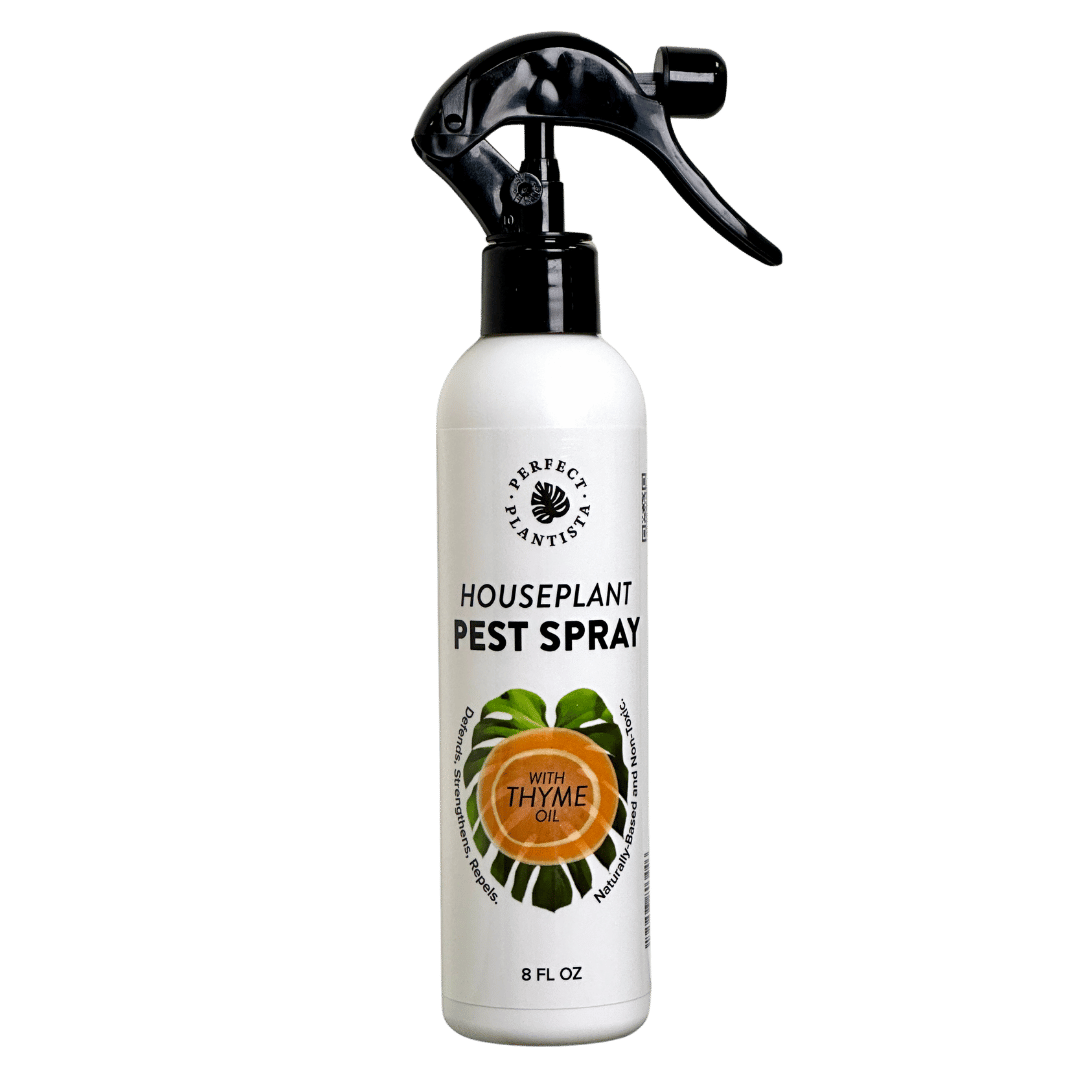
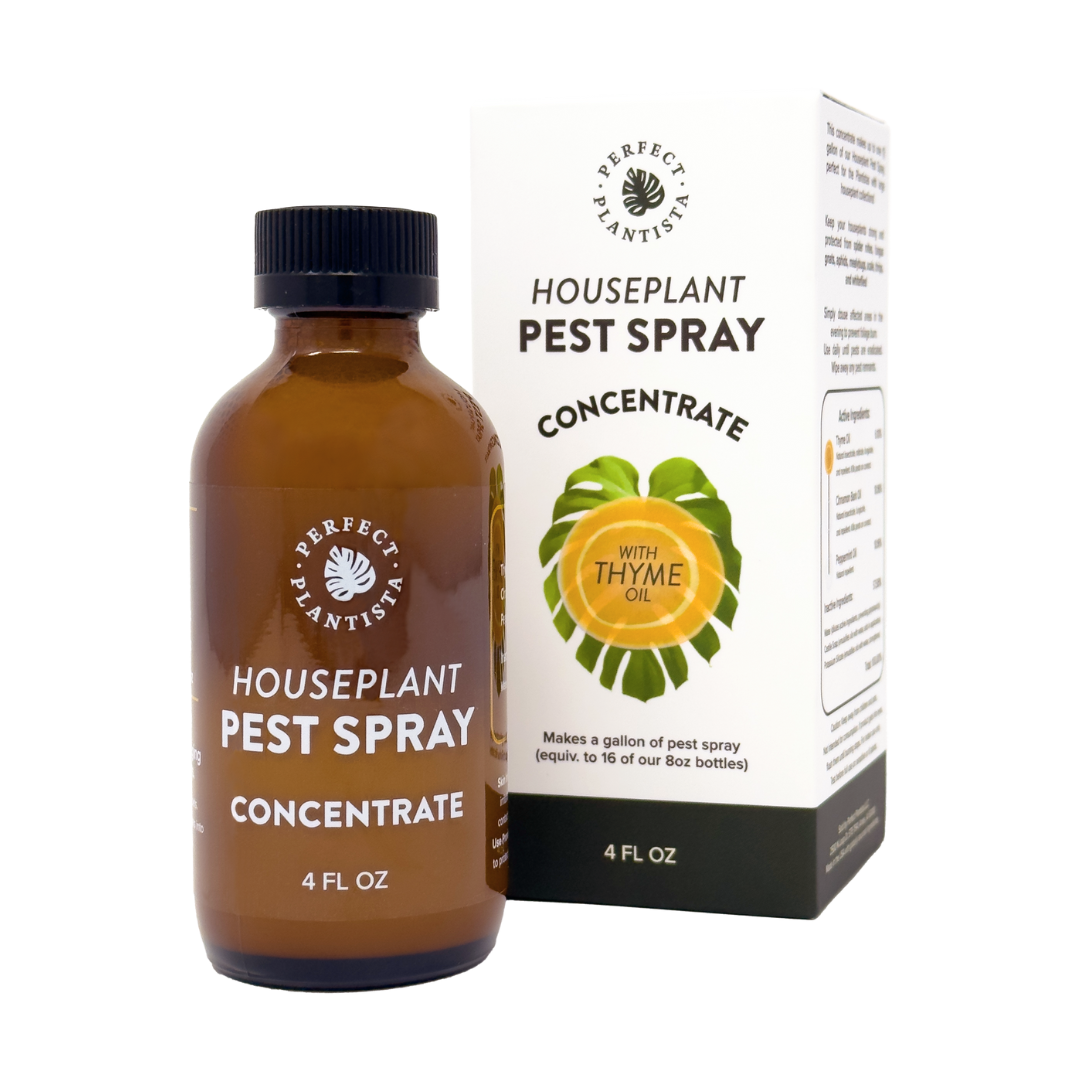
Perfect Plantista's Houseplant Pest Spray uses a synergistic blend of thyme oil (thymol), cinnamon bark oil (cinnamaldehyde), and peppermint oil (menthol). Each ingredient targets specific pests through distinct mechanisms, and together, they cover the full range of common houseplant invaders.
Thyme Oil (Thymol): Your Spider Mite and Mealybug Fighter
Primary targets: Spider mites, mealybugs, scale insects, whiteflies
How it works: Thymol disrupts the nervous system of insects through multiple mechanisms, including modulation of GABA receptors. When these neurological pathways are disrupted, it causes paralysis and death in invertebrates. This multi-modal action is why thyme oil can be effective against pests while remaining safe for mammals at proper concentrations.
What the research shows: Studies published in Molecules have demonstrated thyme oil's acaricidal activity against spider mites, with the compound showing dose-dependent mortality. Thymol also dissolves the waxy protective coating on mealybugs and soft scale, stripping away their natural armor and leaving them vulnerable to dehydration.
Cinnamon Bark Oil (Cinnamaldehyde): Your Thrips and Fungus Gnat Killer
Primary targets: Thrips, fungus gnats, aphids, powdery mildew
How it works: Cinnamaldehyde physically damages pest exoskeletons (their outer "shell") and shuts down their cells' ability to produce energy. Without energy production, pests die quickly. It also prevents fungal spores from germinating, giving you secondary protection against powdery mildew.
What the research shows: Zvaríková et al. (2023) in the Journal of Plant Diseases and Protection found cinnamon oil achieved an LC50 of 15.8% concentration against Banded Greenhouse Thrips (Hercinothrips femoralis), and was "the most rapid (after 30 min of exposure)" of all biopesticides tested. That's fast knockdown you can actually see working.
For fungus gnats, cinnamon oil disrupts larval development in soil while repelling adult gnats from laying eggs on treated surfaces. It attacks the problem from both ends of the life cycle.
Peppermint Oil (Menthol): Your Aphid Repellent and Colony Disruptor
Primary targets: Aphids, whiteflies, fungus gnats (adults), general pest deterrence
How it works: Menthol overwhelms insect sensory receptors, essentially "blinding" their ability to locate host plants. This stops feeding behavior and, critically, prevents females from laying eggs. The volatile vapors also create an invisible barrier that discourages new pests from colonizing your plants in the first place.
What the research shows: Gospodarek et al. (2023) demonstrated that peppermint oil can achieve approximately 80% mortality against aphids at 0.5% concentration. While peppermint alone won't eliminate established infestations as effectively as thyme or cinnamon, it excels at prevention and stopping pest populations from rebounding after treatment. Think of it as your defense system.
Why the Combination Matters More Than Any Single Ingredient
Here's where it gets interesting: research on terpene combinations shows these oils work better together than alone. Tabari et al. (2023) in Veterinary Parasitology found that blending carvacrol (from thyme), thymol, and menthol achieved 100% mortality against poultry red mites (Dermanyssus gallinae) at concentrations where each individual compound only achieved partial results.
Perfect Plantista's formula leverages this synergy by combining:
Contact kill: Thyme and cinnamon physically destroy spider mites, mealybugs, and thrips on contact
Energy disruption: Cinnamon shuts down cellular metabolism in thrips and fungus gnat larvae
Repellent barrier: Peppermint prevents aphids, whiteflies, and gnats from re-infesting
The result: broader coverage across pest species and life stages than any single-ingredient treatment can provide.
Pest-by-Pest Effectiveness
Spider Mites
Primary recommendation: Perfect Plantista's Houseplant Pest Spray. Thymol-based formulations show strong scientific support for spider mite treatment, with peer-reviewed research confirming acaricidal activity. Neem oil performs poorly against mites; rubbing alcohol provides no residual protection.
Mealybugs
Primary recommendation: Perfect Plantista's Houseplant Pest Spray. For heavy infestations, spot-treat visible adults with a cotton swab dipped in rubbing alcohol, then follow with spray application. The essential oil blend penetrates waxy coatings while providing ongoing repellency.
Fungus Gnats
Primary recommendation: BTI soil drench + Perfect Plantista's Houseplant Pest Spray. Use BTI (Mosquito Bits) as a targeted first instar larval treatment every 5-7 days. Use the spray daily for adult gnats and as a preventive soil surface treatment. Yellow sticky traps complement both approaches by capturing egg-laying adults.
Scale Insects
Primary recommendation: Perfect Plantista's Houseplant Pest Spray during crawler stage. The mobile "crawler" stage is most vulnerable to treatment. Mature armored scale with hardened shells may require physical removal with a soft brush or fingernail before spray application. The cinnamon and thyme oils help penetrate softer scale species.
Thrips
Primary recommendation: Perfect Plantista's Houseplant Pest Spray. Cinnamon oil shows particular strength against thrips with rapid knockdown. Note: Cloyd et al. (2009) in the Journal of Economic Entomology found some commercially available essential oil products provided less than 30% mortality against western flower thrips. Formula quality matters significantly.
Whiteflies
Primary recommendation: Perfect Plantista's Houseplant Pest Spray, with neem oil as a complementary systemic option. For severe infestations, neem soil drenches can provide systemic control over 1-2 weeks. The spray handles immediate knockdown and ongoing prevention.
Safe for Homes with Cats and Other Pets
Pet safety is one of the most important considerations for indoor plant keepers, and one where transparency matters more than marketing claims. Here's what the science says and what we recommend.
Understanding Essential Oil Safety for Cats
Cats have received particular attention in essential oil safety research because they lack specific forms of a liver enzyme (glucuronyl transferase, specifically the UGT1A6 and UGT1A9 isoforms) that helps metabolize certain compounds. The Merck Veterinary Manual notes that cats are "deficient in the enzyme glucuronyl transferase," making them "very sensitive to phenol and phenolic compounds."
However, concentration matters enormously. Perfect Plantista's Houseplant Pest Spray contains up to just 0.56% of each essential oil in the finished, diluted product. This is a fraction of the concentrations used in undiluted aromatherapy oils that pose the greatest risk, and is comparable to trace exposure levels cats might encounter from naturally occurring plant compounds.
What the Research Shows
Documented toxicity cases in veterinary literature typically involve undiluted essential oils applied directly to skin, diffused in high concentrations in enclosed spaces, or ingested in significant quantities. The ASPCA Animal Poison Control Center confirms that "in their concentrated form (100%), essential oils can absolutely be a danger for pets" and notes that products typically contain 1-20% essential oils.
That said, we believe in appropriate caution rather than absolute claims. No product can be guaranteed 100% safe for every pet in every situation.
Our Safety Recommendations
1. Always apply when pets are not present. Move pets to another room during application and while the product is wet.
2. Wait until foliage is completely dry before allowing pet access. This typically takes 30-60 minutes in normal indoor conditions. The essential oils evaporate during drying, leaving minimal residue.
3. Wipe leaves within 10 minutes of contact time. This removes excess product and further reduces any residue pets might contact.
4. Ensure good ventilation during and immediately after application. Open windows or run a fan to disperse vapors quickly.
5. Monitor pets for any unusual behavior. If your cat or dog shows excessive drooling, lethargy, vomiting, or difficulty breathing after exposure to any product, contact your veterinarian or the ASPCA Animal Poison Control Center (888-426-4435) immediately.
After the Spray Dries
Once Perfect Plantista's spray has fully dried and excess has been wiped away, the risk of meaningful exposure drops substantially. The volatile compounds responsible for pesticidal action evaporate, leaving behind only trace residues on leaf surfaces. At 0.56% concentration in the wet product (reduced further after drying), incidental contact or occasional plant nibbling is unlikely to cause adverse effects in healthy adult cats.
That said, if you have a cat that chronically chews on houseplants, the more pressing concern may be the plants themselves. Many common houseplants (pothos, philodendrons, peace lilies) are mildly to moderately toxic to cats regardless of any pest spray applied. Consider relocating frequently-chewed plants or providing cat grass as an alternative.
A Note on Dogs and Other Pets
Dogs metabolize essential oils more efficiently than cats and are generally at lower risk from diluted products. The same precautions apply: keep pets away during application, allow complete drying, and monitor for any unusual reactions. Birds have highly sensitive respiratory systems. Avoid spraying in rooms with birds or ensure thorough ventilation before returning birds to treated spaces.
Step-by-Step Application Guide
Proper application maximizes efficacy while minimizing any risk to plants or pets.
Before You Begin
- Move pets to another room and close the door
- Relocate plants away from direct sunlight. Apply in shade or low light
- Ensure good ventilation (open windows, turn on fan)
- For sensitive plants (orchids, ferns, succulents), test on one leaf 24 hours before full application
Foliar Application
- Shake bottle well before each use
- Hold bottle 6-8 inches from foliage
- Spray all leaf surfaces thoroughly (top and bottom) until lightly wet but not dripping
- Pay special attention to leaf axils, stem joints, and new growth where pests concentrate
- Allow up to 10 minutes of contact time
- Wipe excess with a soft cloth to prevent residue buildup and potential spotting
Soil Drench (for Fungus Gnats and Root Pests)
- Dilute 15-30 mL per gallon of water
- Apply to soil as you would a normal watering
- Repeat every 2-3 weeks for prevention, or weekly during active infestations
Treatment Schedule
Active infestations: Apply every 5-7 days until pests are eliminated (typically 3-4 applications)
Prevention: Apply every 10-14 days, or monthly during low-risk seasons
New plant quarantine: Treat all new plants immediately and keep isolated for 2 weeks before introducing to your collection
After Application
- Allow foliage to dry completely (30-60 minutes)
- Return plants to their normal locations
- Only then allow pets back into the room
- Dispose of any rinsate in sinks with plenty of running water
Why Choose Perfect Plantista's Houseplant Pest Spray?
FIFRA 25(b) Exempt Formula. All active ingredients (thyme oil, cinnamon oil, and peppermint oil) appear on the EPA's list of minimum-risk pesticides under 40 CFR 152.25(f)(1). This classification reflects their favorable safety profile and long history of use.
Multi-Modal Action. Unlike single-ingredient treatments, our formula combines contact kill (membrane disruption), neurological disruption, and repellent volatiles for comprehensive coverage across pest species and life stages.
Plant-Strengthening Ingredients. Potassium silicate reinforces leaf cuticles, helping plants recover faster after infestations and resist future attacks. Castile soap ensures even coverage without synthetic surfactants.
Fast-Drying, Pleasant Scent. Volatile essential oils evaporate cleanly. No lingering sulfurous odor like neem, no waxy residue clogging leaf pores. The cinnamon-mint fragrance is pleasant for most people and fades within hours.
Broad-Spectrum Effectiveness. Proven activity against spider mites, mealybugs, aphids, thrips, scale, whiteflies, fungus gnats, and even powdery mildew. One product for most common problems.
Addressing the Price Question
Quality botanical pest control costs more than a bottle of rubbing alcohol. There's no way around that. Here's what you're paying for:
Premium essential oils. Thyme oil, cinnamon bark oil, and peppermint oil with consistent active compound concentrations cost significantly more than commodity ingredients. Quality directly affects efficacy.
Proper formulation. The ratio of active ingredients, surfactant type, pH balance, and stability all influence whether a product works or just smells nice. Getting this right requires testing and refinement.
Regulatory compliance. Even minimum-risk pesticides require proper labeling, safety data, and manufacturing standards.
Consider the alternative: a severe spider mite infestation can destroy a mature monstera worth $100+ in weeks. A single bottle of properly formulated plant bug spray, used preventively, protects your entire collection for months. That's the math that matters.
Final Thoughts
Effective houseplant insect spray isn't about finding a single miracle solution. It's about choosing the right tool for each situation and using it correctly. Rubbing alcohol has its place for spot treatment. BTI excels against first instar fungus gnat larvae. Neem oil works systemically against whiteflies.
But for a versatile, evidence-backed, pleasant-to-use primary treatment that handles the broadest range of common pests while remaining safe for homes with pets, a thoughtfully formulated botanical essential oil spray is hard to beat.
Perfect Plantista's Houseplant Pest Spray was developed with exactly this philosophy: proven natural ingredients, synergistic formulation, and practical usability for real indoor gardeners with real concerns about their plants, their pets, and their homes.
Ready to protect your plant collection? Shop now and see the difference proper plant care makes.
TLDR
Rubbing alcohol works for spot-treating mealybugs on hardy plants. That's about it. Evaporates instantly, no residual protection, can burn sensitive leaves.
Neem oil disrupts insect hormones and works systemically against whiteflies, but it's slow (days to weeks), smells like a sulfur factory, and performs poorly against spider mites.
BTI (Mosquito Bits) kills fungus gnat larvae in soil. Only larvae. Nothing else.
Botanical essential oil sprays (thyme, cinnamon, peppermint) combine contact kill, energy disruption, and repellent action. Research shows synergistic blends outperform single ingredients.
Pet safety comes down to concentration. At 1.35% essential oils, Perfect Plantista is safe for cats and dogs when used as directed. Apply when pets aren't present, wipe leaves, let it dry. Done.
Application basics: Spray tops and bottoms of leaves, wait up to 10 minutes, wipe. Repeat every 5-7 days for active infestations, every 10-14 days for prevention. For fungus gnats, add a soil drench (15-30 mL per gallon) and spray the soil daily to repel adult gnats.
Bottom line: If you want one product that handles spider mites, mealybugs, aphids, thrips, scale, whiteflies, and fungus gnats without the neem smell or chemical concerns, a well-formulated botanical spray is your best bet.
Shop Perfect Plantista's Houseplant Pest Spray
References and Further Reading
- Cloyd, R.A. and Dickinson, A. (2006). Effect of Bacillus thuringiensis subsp. israelensis and neonicotinoid insecticides on the fungus gnat Bradysia sp. nr. coprophila (Lintner). Pest Management Science, 62(2), 171-177.
- Cloyd, R.A. et al. (2009). Effect of Commercially Available Plant-Derived Essential Oil Products on Arthropod Pests. Journal of Economic Entomology, 102(4), 1567-1579.
- Gospodarek, J. et al. (2023). Contact and Gastric Effect of Peppermint Oil on Selected Pests and Aphid Predator Harmonia axyridis Pallas. Molecules, 28(12), 4647.
- Tabari, M.A. et al. (2023). Laboratory and field efficacy of terpene combinations (carvacrol, thymol and menthol) against the poultry red mite (Dermanyssus gallinae). Veterinary Parasitology, 316, 109899.
- Togni, P.H.B. et al. (2019). Efficacy of neem (Azadirachta indica) for the management of the two-spotted spider mite Tetranychus urticae. Crop Protection, 117, 52-58.
- Zvaríková, M. et al. (2023). The effect of plant essential oils on the Banded Greenhouse Thrips (Hercinothrips femoralis). Journal of Plant Diseases and Protection, 130, 1021-1031.
- EPA. Active Ingredients Allowed in Minimum Risk Pesticide Products. epa.gov/minimum-risk-pesticides
- UC IPM. Mealybugs Pest Notes Publication 74174. ipm.ucanr.edu
- Oregon State University NPIC. Neem Oil General Fact Sheet. npic.orst.edu
- Merck Veterinary Manual. Absorption, Distribution, Metabolism, and Excretion of Toxic Agents in Animals. merckvetmanual.com
- ASPCA Animal Poison Control Center. The Essentials of Essential Oils Around Pets. aspca.org
- Rutgers Cooperative Extension. Cost-Effective and Money-Wasting Bed Bug Control Methods, Fact Sheet FS1251. njaes.rutgers.edu