
If you've ever had a tiny fly dive-bomb your morning coffee while you're just trying to water your plants, you already know. Fungus gnats.
They're not dangerous to you. They won't bite. But their larvae? They're feasting on your plant's roots right now, causing yellowing leaves, stunted growth, and the kind of slow decline that makes you wonder if you're cursed.
Here's the thing: fungus gnats aren't your fault. They often hitchhike in on store-bought potting soil (thanks, big-box garden centers). And they're not a sign you're a bad plant parent. They're just a sign you have plants.
The good news: you can break the cycle. It takes consistency, not perfection.
This guide covers exactly how to use Perfect Plantista Houseplant Pest Spray to get rid of fungus gnats for good, including daily soil spray protocols, drench dilution ratios, and the environmental fix that makes everything else actually work.
Understanding the Enemy
Average Life Cycle (indoors at ~75°F):
- Egg: ~3 days
- Larva: ~10 days
- Pupa: ~4 days
- Adult: ~7-10 days
Total cycle: approximately 3-4 weeks
This matters because a single spray won't cut it. Those eggs are already in your soil waiting to hatch. You need to outlast the entire lifecycle, plus a buffer.
Minimum treatment time: 4 weeks (one full generation plus wiggle room). Continue maintenance sprays for an additional 2 weeks if any activity persists.
The Protocol: How to Actually Get Rid of Them
Step 1: Soil Surface Spray (Daily)
Lightly mist the top ½ to 1 inch of soil daily for 5-7 days. As adult gnat numbers decline, reduce to 2-3 times per week.
Important: Skip the foliage. Fungus gnats don't live on leaves. Spraying leaves for fungus gnats is like mopping the ceiling because the floor is wet. Concentrate the product on the soil surface and root zone.
Step 2: Soil Drench (Every 2-3 Weeks)
For larvae hiding deeper in the soil, mix 15-30 mL (1-2 tablespoons) of pre-mixed Perfect Plantista Houseplant Pest Spray per 1 gallon of water.
- Use 15 mL/gal for sensitive plants or light prevention
- Use 30 mL/gal for active infestations on mature plants
Application:
- Water your plant first. Never apply to dry soil.
- Pour the diluted mixture slowly around the base until the top 2-3 inches of soil are saturated.
- Avoid flooding the pot.
- Let the top 1-2 inches of soil dry before the next regular watering.
Reapply every 2-3 weeks as needed.
Step 3: The Environmental Fix (This Is Where Most People Fail)
Let your soil dry out completely between waterings.
This isn't optional advice. It's the whole game.
Fungus gnat larvae need persistently moist soil to survive. Feel the soil before watering. If it feels cold or damp an inch down, that plant does not need water. Walk away. Come back in a few days.
Overly damp soil allows larvae to survive and restart the cycle. You can spray perfectly and still fail if you're overwatering.
Step 4: Hydrogen Peroxide Boost (Optional but Effective)
Every time you water regularly, mix a 1:4 ratio of 3% hydrogen peroxide to water and water thoroughly once, allowing the soil to dry completely before resuming regular watering.
The hydrogen peroxide oxidizes and eliminates larvae deeper in the soil that the spray can't reach. Don't use this weekly, though. Excess moisture can re-enable breeding conditions. Once per regular watering cycle is plenty.
Step 5: Sticky Traps (Your Early Warning System)
Yellow sticky cards near the soil surface help capture adults during treatment. They won't solve the problem alone, but they'll show you whether your efforts are working.
Fewer gnats on the trap each week = progress.
Why Fungus Gnats Sometimes Get Worse After Spraying
You're not imagining it.
Eggs often hatch after your initial application. You killed the adults, but the next generation was already waiting in the soil like a tiny, annoying army.
This is normal. Stay consistent with soil sprays and drenches, keep letting that soil dry out, and you'll break the cycle within 4-6 weeks.
The Complete Weekly Schedule
| Day | Action |
|---|---|
| Daily (Days 1-7) | Light soil surface spray |
| After Day 7 | Reduce to 2-3x per week as adults decline |
| Every 2-3 weeks | Soil drench (15-30 mL per gallon) |
| Every watering | Optional hydrogen peroxide boost (1:4 ratio) |
| Ongoing | Let soil dry completely between waterings |
Timeline: Minimum 4 weeks of consistent treatment, plus 2 additional weeks of maintenance if any activity persists.
From One Plant Parent to Another
Look, fungus gnats are demoralizing. You do everything right, and there they are, hovering around your soil like they pay rent.
But here's what we've learned from thousands of customers who've been exactly where you are:
It's not about finding a magic spray. It's about consistency.
Spray the soil (not the leaves). Let it dry. Drench every few weeks. Be patient. In a month, you'll wonder why you ever stressed about it.
You're not a bad plant parent. You just have plants. And plants come with bugs sometimes.
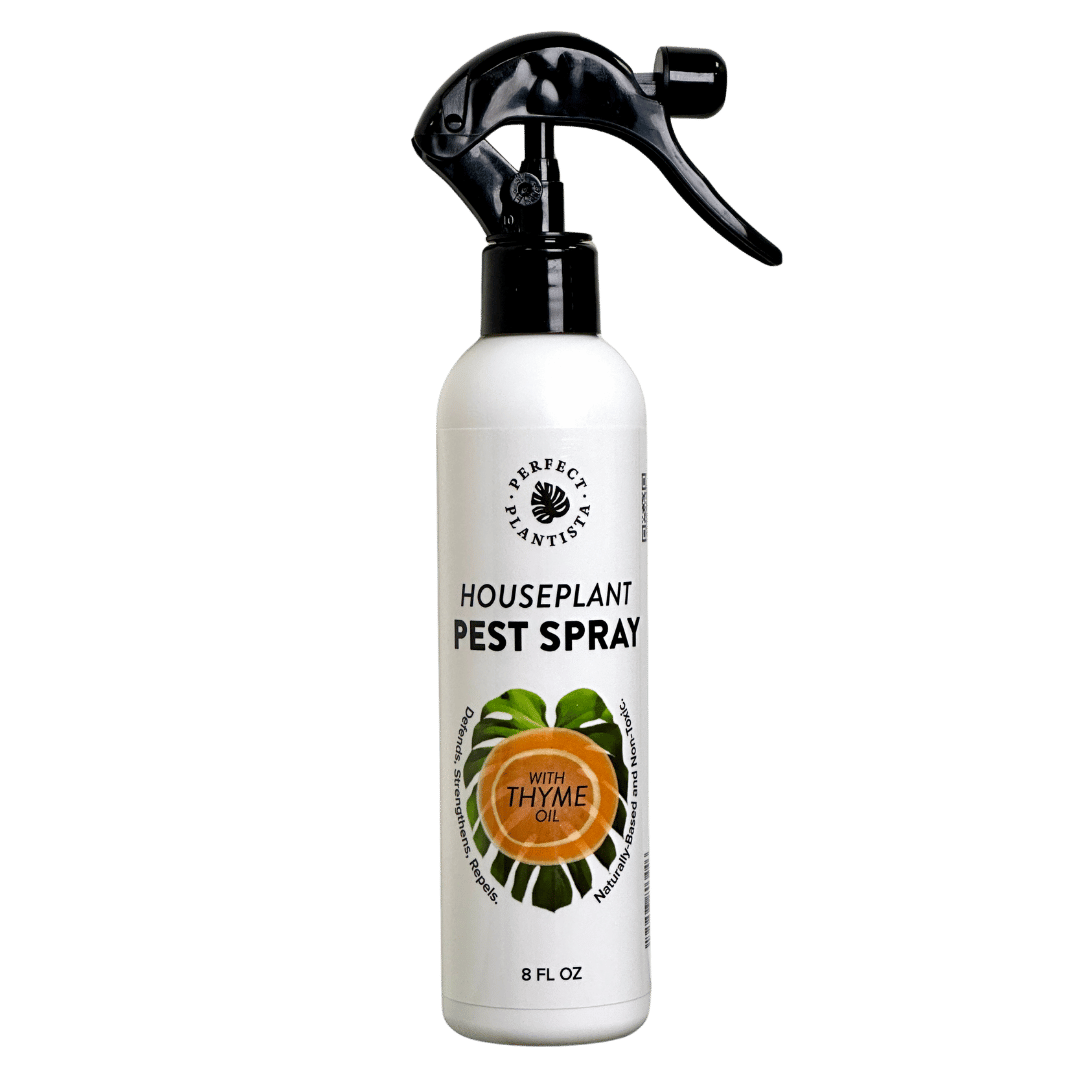
Our Houseplant Pest Spray combines thyme oil, cinnamon bark oil, and peppermint oil in a water-based formula that won't leave greasy residue or make your apartment smell like a garlic factory. It's safe for pets once dry, and it smells like Christmas morning crossed with a candy cane. Which is significantly better than neem.
Quick Reference: Fungus Gnat Protocol
Primary Method: Soil spray + periodic soil drench
Foliage: Skip it. Fungus gnats are a soil problem.
Soil Spray: Mist top ½-1 inch daily for 5-7 days, then 2-3x/week
Soil Drench: 15-30 mL per gallon, every 2-3 weeks
Environment: Let soil dry completely between waterings
Duration: 4 weeks minimum, plus 2 weeks maintenance if needed
Why this works: The spray kills eggs and pupae near the surface. Drying the soil interrupts the larval stage. The drench reaches deeper larvae. Consistency outlasts the lifecycle.
Why Fungus Gnats Require More Product (And How to Save)
Here's the reality: fungus gnats are the marathon of houseplant pests.
Spider mites? A few weeks of consistent treatment. Aphids? Often resolved in 2-3 applications. But fungus gnats require daily soil spraying plus bi-weekly drenches for 4-6 weeks minimum. That's a lot of spray.
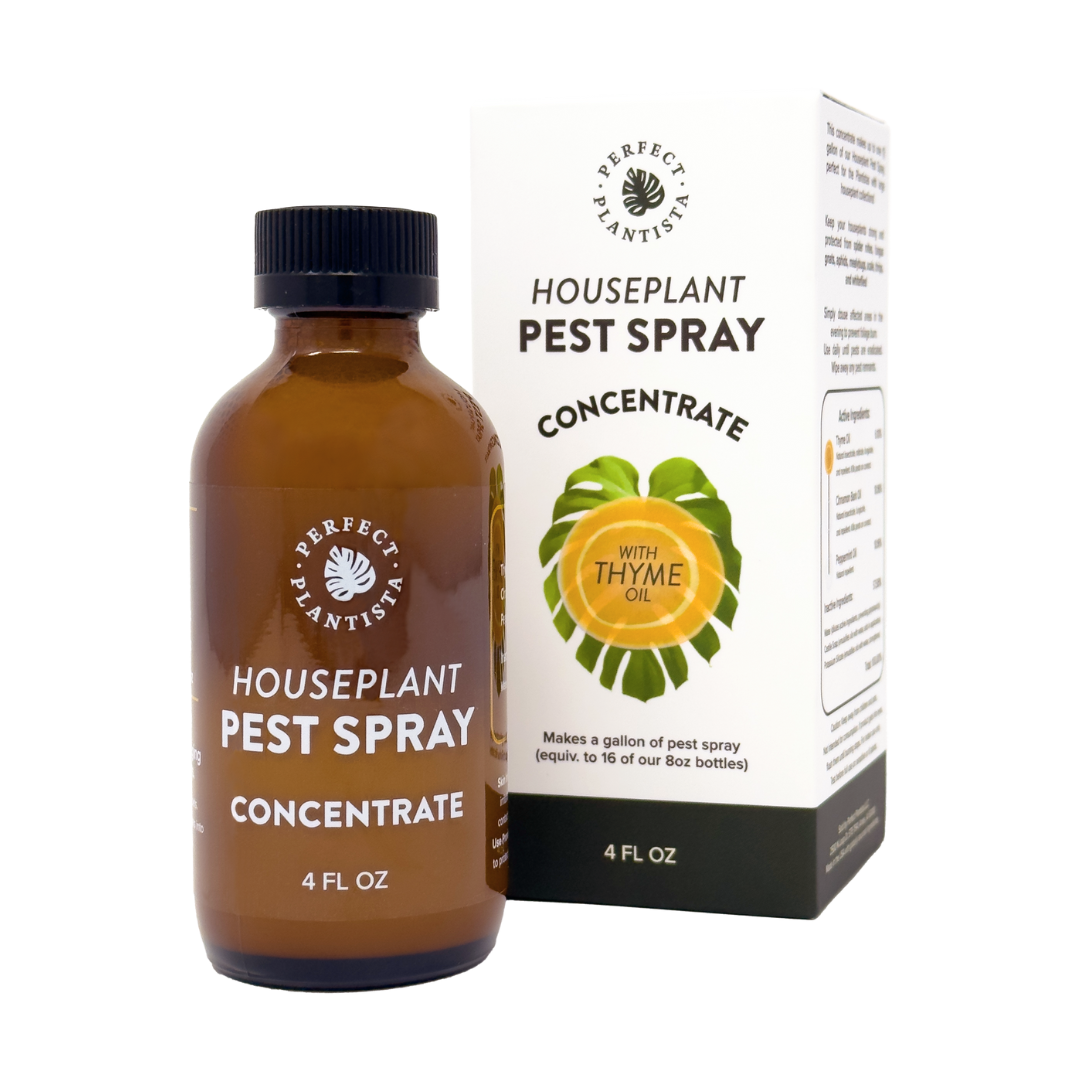
If you're treating multiple plants (or have learned the hard way that fungus gnats spread fast), our Concentrate Starter Kit makes the math work in your favor.
One 4oz bottle of concentrate makes:
- Up to 16 bottles of 8oz ready-to-use spray, or
- Up to 8 bottles of 16oz ready-to-use spray
That's enough natural houseplant pest spray to treat your entire collection through the full fungus gnat lifecycle, with plenty left over for prevention and future infestations. The Starter Kit includes the concentrate plus mixing bottles, so you're ready to go immediately.
For plant parents dealing with persistent fungus gnats across multiple pots, the concentrate typically saves 40-50% compared to buying ready-to-use bottles individually. And since fungus gnat treatment isn't a one-and-done situation, that savings adds up.
[Shop the Concentrate] | [Shop Ready-to-Use Spray]
Safe, Effective Fungus Gnat Treatment for Indoor Plants
Perfect Plantista Houseplant Pest Spray combines thyme oil (0.23%), cinnamon bark oil (0.56%), and peppermint oil (0.56%) in a water-based carrier that won't leave greasy residue or overwhelm your apartment with chemical odors. It's a pet-friendly pest spray for plants that's safe for cats and dogs once dry, and it smells like cinnamon and peppermint rather than the garlic-adjacent nightmare of neem oil.
Whether you choose the ready-to-use indoor plant bug spray or mix your own from concentrate, the formula is the same: natural, effective, and designed specifically for the reality of houseplant pest control.
Your plants didn't ask for fungus gnats. Neither did you. But with consistent treatment and a product that actually works, you'll break the cycle and get back to enjoying your collection instead of dreading the tiny flies hovering around it.